
Can you believe steel building home kits cost just $10 to $25 per square foot for plans and materials?
The numbers are impressive – a 30’x30’x16′ metal building kit costs only $18,400. A fully finished metal home ranges from $50 to $145 per square foot. I was amazed at how affordable these kits were compared to traditional construction.
The numbers explain why steel home building kits have become so popular. A complete 40×60 metal building home (2,400 square feet) costs between $120,000 and $350,000. Smaller options start at $20,000 for a 12’x20′ home. The kit price is just the starting point – one example showed a $34,000 (Canadian) kit that ended up costing $140,000 after complete construction.
Steel frame home kits provide a practical solution for first-time homebuyers, weekend retreat seekers, or anyone looking to live more affordably. This piece walks you through selecting, designing, and building your dream steel home while keeping steel building home kits prices in mind.
Choosing the Right Steel Building Kit
Steel building kits need proper planning and research to make your dream home match your needs and local rules. These kits give you flexibility and durability, but you’ll need to pay attention to several key details to make the right choice.
Factors to consider before buying
Your steel building project needs solid planning as its base. Start by defining how you’ll use your structure. Will it be your main home, a weekend getaway, or maybe even a mix of living space and workshop? This choice shapes every part of what you’ll pick.
Getting the size right matters just as much. Figure out the square footage you need based on your plans, as this will affect your kit choice and budget by a lot. Your building’s style also matters – from roof systems to reinforcements and custom features that make the structure yours.
Your building site needs careful planning too. Make sure the land is cleared, graded, and sits above natural water flow. Good prep work helps protect against weather damage and lets you install your steel frame home kit the right way.
Check local rules and permit needs before you buy. Most areas need building permits for permanent structures, and skipping these could lead to big fines. Many places also have rules about how far your building must sit from property lines.
Comparing popular steel frame home kits
You’ll find several types of steel building systems, each with its own benefits. I-beam buildings are the top choice for many makers. They ship anywhere and use solid steel I-beams that give you exceptional stability.
C-channel buildings cost less than I-beam options but still give you an all-steel structure. These work great for workshops, garages, and storage. The lower cost comes with some trade-offs – they might have size limits and engineering standards that don’t work everywhere.
Tube steel buildings shine in carport applications. They’re light, usually open-sided, with a light gage roof. You can put these together with basic tools, which makes them perfect for smaller projects.
Let your building’s purpose guide what you choose. For homes, barndominiums, or backyard studios, look at kits made for living spaces. These come with pre-engineered wall panels and roof systems ready for residential finishing.
Where to buy residential steel building kits
Many makers sell straight to buyers, which often means better prices than going through middlemen. Direct buying cuts out markups and saves you time and money.
Take time to research your supplier’s track record, past work, and reputation. Companies with years of experience in prefabricated metal buildings tend to deliver what they promise.
Some trusted names stand out in residential steel building kits. Worldwide Steel Buildings makes USA-built prefab kits with pre-punched and pre-welded pieces. Even DIYers find them easy to put together. You can customize their home kits from more than 42 million design options.
Get quotes from at least two makers before you decide. This helps you find the best deal on your steel building home kit investment.
Designing Your Dream Layout
The creative part begins after you pick your steel building kit. Steel frame structures give you amazing design flexibility. You can create spaces that match your lifestyle and vision perfectly.
Open floor plans and modular options
Steel building home kits are perfect for open-concept designs because of their clear span capabilities. These structures can stretch up to 300 feet without needing interior support columns. This gives you the freedom to create bright, welcoming interiors with a modern feel.
Steel frame home kits are highly versatile because of their modular design. Companies like General Steel work with you to make sure your final product fits your needs exactly. Most providers have pre-designed layouts ready to go, but you can also customize everything to match your vision.
The residential steel building kits let you play with different looks. Standard kits come with pre-painted 26-gage metal siding, but you can switch to Hardie board, stucco, or faux stone panels to create your own unique exterior.
Incorporating future expansion
Metal building home kits stand out because they can grow with you. The right end wall design and construction lets you add more space easily.
Your steel home will be ready for growth if you choose expandable rigid-frame end walls from the start. The expansion process is straightforward:
- Remove the end wall sheeting
- Pour a new concrete foundation
- Add the additional rooms or space needed
This smart engineering makes steel buildings ideal for growing families or expanding businesses. You can even add a second story with self-supporting mezzanine floors if you can’t expand outward.
Customizing for lifestyle needs
Steel building home kits adapt beautifully to different lifestyle needs. Your dream layout should work for both today and tomorrow. Think about how many bedrooms you want, garage size, outdoor spaces, and special features like master bedroom mezzanines.
These homes excel at creating spaces that serve multiple purposes. Open floor plans let rooms do double duty – like living rooms that work as home offices or play areas. This flexibility is especially valuable in smaller homes.
Your flooring choice adds another personal touch. Here are some popular options:
- Finished concrete: You can customize it through staining, dyeing, or etching
- Poured resin: Looks smooth and needs little maintenance
- Waterproof vinyl: Gives you a wood or tile look for less money
Flexibility remains your biggest advantage throughout the design process. Metal building home kits let you create a truly unique space – from overall style and size to window placement and color schemes.
Step-by-Step Build Process
Your steel home vision comes to life through several carefully planned construction steps. A clear understanding of each building stage will help your project move smoothly from foundation to finished home.
Site prep and foundation basics
A successful build starts with proper site preparation. You need to clear the construction area of vegetation, rocks, and debris that might affect your foundation. The site needs proper leveling, with careful attention to water runoff grading to prevent future moisture problems.
Call 811 to mark underground utilities and verify local building codes for permits before breaking ground. Construction equipment and delivery vehicles need easy access to your site, with parking space within 50 feet of where you’ll build.
Most residential steel building kits need a concrete foundation, with three main options:
- Concrete slab: The most common choice, costs about $6-$10 per square foot
- Pier footings: A budget-friendly option at $3-$6 per square foot
- Stem wall: A premium choice at $8-$15 per square foot
Your concrete foundation needs 7-10 days to cure before assembly begins.
Kit delivery and unloading tips
Your steel frame home kit arrives on a flatbed truck. Multiple buildings sometimes ship together to cut costs. You’ll get a detailed packing list before delivery to check your inventory.
You’ll need either:
- A forklift or similar equipment (recommended)
- 5-6 strong people to unload smaller buildings manually
Check all components against your packing list when they arrive and take photos of any damage right away. Keep materials safe by raising panels on wood blocks, letting air flow between stacked bundles, and using ventilated tarp covers.
Framing and shell assembly
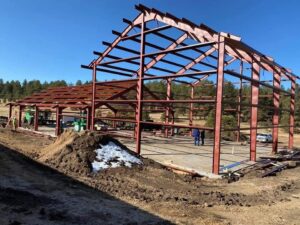
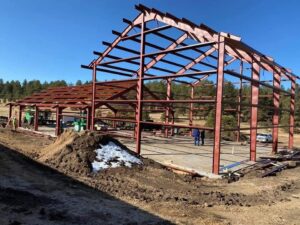
Start assembly with the foundation frame. Set columns at their anchor bolt spots and work from center outward. Each column needs proper leveling before moving to the next.
The main structure goes up like this:
- Put together I-beam columns and rafters first
- Install sidewall girts after center frame columns
- Add rafter frames, purlins, and eave struts
- Use temporary bracing until walls have sheeting
Follow this order for remaining rafters and check alignment and levelness as you go.
Interior build and finishing
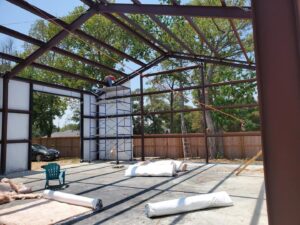
Interior construction starts after shell completion. Residential spaces need these steps:
- Build interior wall frames (lay them out on the floor first)
- Add studs to strengthen walls
- Create frames for doors and windows
- Attach wall studs to horizontal girts
- Set up ceiling framework if needed
Install all electrical, plumbing, and mechanical systems before closing walls. These need inspection and approval before you continue with interior finishing.
Your finishing options range from industrial looks to traditional home styles with drywall, wood paneling, or vinyl coverings. Steel building home kits offer amazing flexibility – you can use almost any interior finish found in regular homes.
Cost Breakdown and Budgeting Tips
Steel home projects need a detailed breakdown of all costs. Building a metal house goes beyond just buying a kit. A realistic budget helps you avoid getting pricey surprises down the road.
Steel building home kits prices explained
Steel building home kits’ base price ranges The biggest problem is thermal conductivity for materials alone. This makes up just 30% of your total project cost. A complete build with labor and finishing work will run between $50 and $145 per square foot.
Size substantially affects pricing. A 1,000 sq. ft. steel home might cost $50,000-$145,000, while a 2,400 sq. ft. structure ranges from $120,000-$350,000. Basic prefabricated kits start around $20,000, and customizable options can reach $90,000.
Labor, materials, and finishing costs
Labor costs take up much of your budget. Professional erection services for the steel structure usually cost $5 to $10 per square foot[191]. Here are the hourly rates you should expect for specialized professionals:
- General contractors: $50-$150
- Structural engineers: $100-$220
- Interior designers: $50-$200
A concrete slab foundation typically costs $4 to $8 per square foot. Site preparation adds $1,000-$10,000 based on your site’s condition and includes surveying, soil testing, clearing, and grading.
Interior finishing makes up about 55% of total costs. This covers insulation ($1-$4.50/sq ft), drywall ($1.50-$3.50/sq ft), flooring ($4-$15/sq ft), and electrical/plumbing systems.
Avoiding common budget pitfalls
Your detailed budget should account for everything from permits ($500-$2,000) to final grading. Watch out for “scope creep” – when unplanned features get added after design approval. Many people also underestimate their site preparation needs.
Keep a contingency fund of 15-20% ready for unexpected expenses. Getting multiple contractor quotes helps you understand market rates and find quality work at fair prices. Of course, construction during off-peak seasons often means better rates.
Pros, Cons, and Real-Life Lessons
Many homeowners have found that steel building home kits come with unique advantages and some distinct challenges. Real-life experiences can help you make an informed decision about your steel home project.
Benefits of steel homes vs traditional homes
Steel frame homes really stand out because of their exceptional durability. Steel structures don’t warp, crack, or move over time, unlike wood. These homes are completely safe from termites and other wood-boring insects, which eliminates the need for expensive treatments and repairs.
Steel’s natural non-combustible properties make it fire-resistant. This safety feature and its ability to withstand winds up to 140 mph usually leads to lower insurance costs for homeowners.
Steel’s structural strength allows spacious interior designs with higher ceilings and fewer support columns. You get open, flexible layouts without load-bearing interior walls, giving you freedom to customize your space.
Challenges and how to overcome them
Steel construction comes with its share of hurdles.The biggest problem is thermal conductivity—steel moves heat and cold faster than wood, which can create condensation issues in colder climates. Proper insulation and vapor barriers can solve this problem.
Your project’s budget might change along the way. A detailed budget with a 15-20% contingency fund and fixed pricing options from your supplier can help you stay on track.
Specialized labor requirements can get pricey at first. You could save up to 50% on overall expenses by being your own general contractor, if you know construction or are good at research.
Tips from real steel home builders
Steel home owners say exceptional customer service is vital to project success. One builder said, “Anytime I had questions, I never talked to anyone who wasn’t overly helpful”.
First-time builders should research permit requirements early. A builder found that there was “Councils don’t like owner-builders!”. Detailed documentation for inspections will save you headaches.
Planning should include your future needs. One owner’s only regret was “that we didn’t include the mezzanine for additional storage”. This feature would have made their already great steel home experience even better.
What We Think
Steel building home kits provide an available path to homeownership that brings together affordability, durability, and customization. In this piece, we’ve explored how these innovative structures cost substantially less than traditional construction and provide remarkable strength and design flexibility.
Your experience starts with careful planning. You need to select the right kit type, compare manufacturers, and understand your specific needs before making any purchase. This groundwork shapes your project’s soaring win and long-term satisfaction.
Design flexibility emerges as maybe even the most exciting aspect of steel homes. Clear span capabilities create open, airy spaces without support columns. The modular nature makes future expansions straightforward. You can build a home that mirrors your unique lifestyle and priorities.
The build process might look intimidating at first. Breaking it down into manageable steps makes construction possible even for first-time builders. Each phase follows a logical progression toward your completed dream home – from site preparation to foundation pouring, frame assembly to interior finishing.
Budget stays crucial throughout your project. Note that kit prices make up only about 30% of total costs. You must factor in extra expenses for labor, foundation work, insulation, and interior finishing into your financial planning. A 15-20% contingency fund will shield you from unexpected challenges.
Steel homes bring some challenges, especially when you have thermal conductivity and specialized labor requirements. But proper insulation, vapor barriers, and thorough research can overcome these obstacles. The benefits are nowhere near these manageable drawbacks for most homeowners – exceptional durability, fire resistance, pest immunity, and design flexibility stand out.
Building your own steel home means more than just construction. You’re creating an individual-specific sanctuary that will stand strong for decades. Steel building kits are a practical solution to think about for your next home building project, whether you want affordability, open spaces, or environmental sustainability.
Final Thoughts
Building your dream home with steel building kits offers an affordable, durable alternative to traditional construction that can save thousands while providing exceptional design flexibility.
- Steel building kits cost $10-25 per square foot for materials, but total project costs range $50-145 per square foot including labor and finishing work.
- Steel homes offer superior durability with resistance to termites, fire, and winds up to 140 mph, plus open floor plans without load-bearing walls.
- Proper planning is crucial: secure permits early, prepare your site thoroughly, and budget an extra 15-20% for unexpected expenses.
- The build process follows clear steps from foundation to finishing, with many components pre-engineered for easier DIY assembly.
- Consider thermal conductivity challenges in cold climates and factor in specialized labor costs when budgeting your steel home project.
Steel building kits represent a practical path to homeownership that combines cost savings with long-term durability. Success depends on thorough planning, realistic budgeting, and understanding both the advantages and challenges of steel construction before breaking ground.
FAQs
Q1. What are the main advantages of building a steel home compared to traditional construction?
Steel homes offer superior durability, resistance to pests and fire, and the ability to withstand high winds. They also provide greater design flexibility with open floor plans and higher ceilings due to fewer support columns needed.
Q2. How much does it typically cost to build a steel frame home?
The total cost for a steel frame home ranges from $50 to $145 per square foot, including labor and finishing work. The steel building kit itself usually costs between $10 to $25 per square foot for materials alone.
Q3. Can I build a steel home myself, or do I need specialized contractors?
While it’s possible to build a steel home yourself, especially with pre-engineered kits, specialized knowledge is often required. Many homeowners choose to act as their own general contractor to save costs, but hiring professionals for complex tasks like electrical and plumbing work is recommended.
Q4. What are some common challenges when building a steel home?
Common challenges include addressing thermal conductivity issues, especially in colder climates, and potentially higher initial costs due to specialized labor requirements. However, these can be mitigated with proper insulation and careful budgeting.
Q5. How long does it take to build a steel frame home?
The construction time for a steel frame home can vary, but it’s generally faster than traditional construction. Once the foundation is prepared, the frame can often be erected in a matter of days or weeks, with the entire project typically taking several months to complete, depending on size and complexity.