
Massachusetts is known for its cold winters, humid summers, and unpredictable weather swings. If you’re planning a steel building—whether for residential, agricultural, or commercial use—choosing the right insulation is essential. The right insulation does more than keep the building warm; it reduces energy costs, prevents condensation, and extends the life of your structure.
At Mason Steel Buildings Corp., we help customers across New England design steel buildings that balance comfort, efficiency, and durability. Here’s a breakdown of the best insulation options for steel buildings in Massachusetts and what you need to know before you build.
Why Insulation Matters for Steel Buildings
Unlike wood-framed buildings, steel conducts heat and cold quickly, which can lead to energy loss and condensation without proper insulation. Effective insulation provides:
- Energy efficiency – Lower heating and cooling bills.
- Moisture control – Prevents condensation that can damage interiors.
- Comfort – Stable temperatures inside, regardless of outdoor weather.
- Noise reduction – Damps sound, especially useful in workshops or event centers.
Learn more about overall building benefits on our Benefits of Pre-Engineered Steel Buildings page.
1. Fiberglass Blanket Insulation
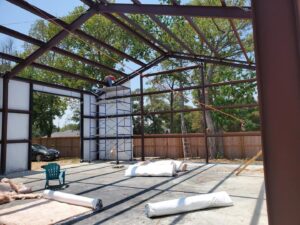
Fiberglass insulation is one of the most cost-effective and popular choices for steel buildings. It comes in rolls or batts and is installed between the framing.
Pros:
- Affordable upfront cost
- Easy to install during construction
- Provides decent R-value (insulation rating)
Cons:
- Can lose effectiveness if compressed
- Requires vapor barriers in Massachusetts to prevent condensation
For garages, workshops, or agricultural structures, fiberglass is often the most practical option.
2. Rigid Foam Board Insulation
Rigid foam panels (like polyisocyanurate or polystyrene) offer excellent thermal resistance and moisture protection.
Pros:
- High R-value per inch
- Great for walls and roofs
- Resistant to moisture and mold
Cons:
- More expensive than fiberglass
- Needs careful installation to prevent gaps
Rigid foam is ideal for commercial or residential steel buildings where higher efficiency is required.
3. Spray Foam Insulation
Spray foam is one of the most effective insulation methods for steel buildings. Applied as a liquid, it expands to fill gaps and creates an airtight seal.
Pros:
- Highest R-value per inch
- Excellent air and moisture barrier
- Adds structural rigidity to walls
Cons:
- Higher cost than other methods
- Requires professional installation
Spray foam is perfect for Massachusetts winters, where air leakage can drive up heating bills. It’s also great for barndominiums or office-style steel buildings where comfort is a priority.
4. Reflective Insulation (Radiant Barrier)
Reflective insulation uses aluminum foil to reflect radiant heat. While not typically used alone, it’s often combined with fiberglass or foam.
Pros:
- Helps regulate summer heat
- Reduces condensation
- Lightweight and easy to install
Cons:
- Limited thermal resistance on its own
- Best used in combination with other insulation
This option works well in roof systems and attics, especially when paired with another insulation type.
Factors to Consider in Massachusetts
When choosing insulation for a steel building in Massachusetts, keep in mind:
- Energy Codes: Massachusetts follows strict energy codes for commercial and residential construction. Proper R-values must be met.
- Climate: Winters are long and cold, so high R-value insulation (like spray foam or rigid board) is recommended for year-round comfort.
- Moisture: Humidity and snow make vapor barriers essential to prevent condensation.
- Budget: Fiberglass is affordable; spray foam is premium but offers long-term savings.
Recommended Uses by Building Type
- Residential Barndominiums → Spray foam + rigid board for comfort & efficiency
- Garages & Workshops → Fiberglass or rigid board for cost-effective solutions
- Agricultural Buildings → Fiberglass with vapor barrier for barns & arenas
- Commercial Warehouses → Rigid board or spray foam for large-scale efficiency
See examples of insulated projects in our Gallery.
How Mason Steel Buildings Corp. Helps
At Mason Steel Buildings Corp., we don’t just sell building kits—we guide you through every step of the process, including insulation planning. From our Design a Building tool to expert project support, we help ensure your building is comfortable, efficient, and compliant with local codes.
- Learn more about our building systems: Steel Buildings
- Customize your structure: Design a Building
- Get expert pricing: Request a Quote
Final Thoughts
The right insulation can make or break the performance of your steel building in Massachusetts. From budget-friendly fiberglass to high-efficiency spray foam, each option has strengths depending on your goals.
With Mason Steel Buildings Corp., you’ll get honest guidance, factory-direct pricing, and long-lasting results. We’ll help you select the right materials, design your structure, and build a steel building that’s comfortable year-round.
Start planning today with our Request a Quote page or explore our Design a Building tool to begin customizing your project.